Edible England
Created by Friends of the Church on the Hill for a Heritage Open Days Display at St. Mary's Church 2021
Here are just a few fruits of the countryside which grow locally and can be eaten and enjoyed in many ways
Blackberries - Rubus fruticosus
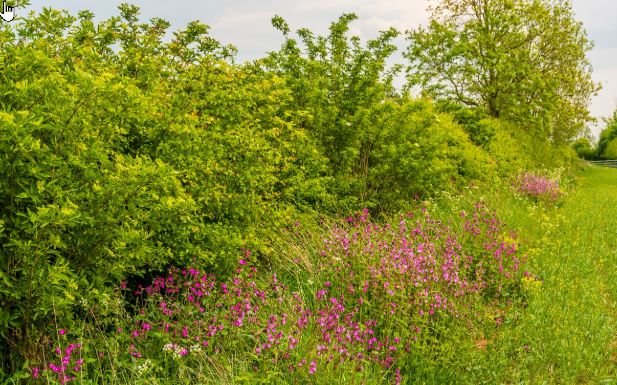
Everyone is familiar with these delicious berries growing wild in hedgerows across the country. It is not a berry in the botanical sense of the word as the fruit is composed of small drupelets or drupes. Vigorously growing, it soon becomes a "bramble" thicket (its other common name). Flowers appear in late Spring and early summer with five white or pale pink petals. Bees are vital to pollination to produce the fruit which ripen in late Summer or early Autumn.
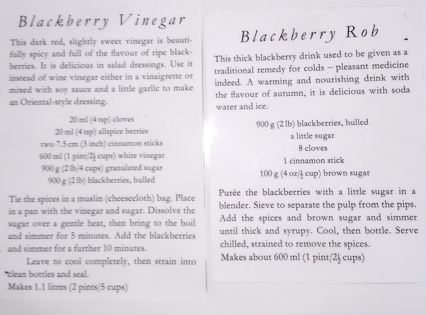
Folklore tells us that blackberries should not be picked after Michaelmass Day (11th October) as they are supposedly bitter at this time. Blackberry jam and Apple Crumble/Pie, Blackberry wine, blackberry vinegar, bramble scones, chocolate and blackberry brownies and blackberry fool are just a few dishes that can be produced from the fruits.
Crab Apples - Malus sylvestris
Crab apples are associated with love and marriage. It is the wild form of apple and ancestor of the cultivated apple, originally thought to come from the mountains of Kazakhstan. The trees commonly grow in hedgerows and can grow to 10 metres in height. With age the trees can become quite gnarled and twisted. This "crabbed" appearance may have influenced its common name "Crab Apple".
It is one of the few host trees to the parasitic mistletoe. In Spring the sweetly scented blossom provides an important source of of early pollen and nectar for insects, particularly bees. The fruits develop into small yellow green, sometimes rosy, fruits 2-3 cm across. The fruit is also eaten by birds including blackbirds, thrushes and crows. Mammals such as mice, voles, foxes and badgers also eat crab apple fruit. They can be tart and are best turned into jams and jellies.

Elderberries - Sambucas
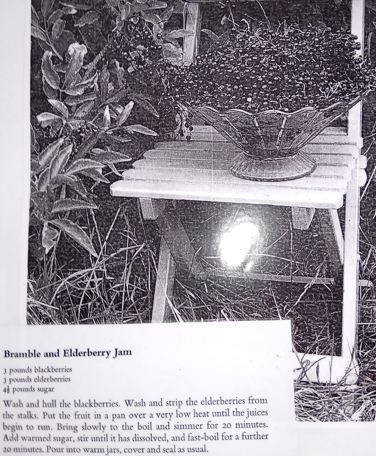
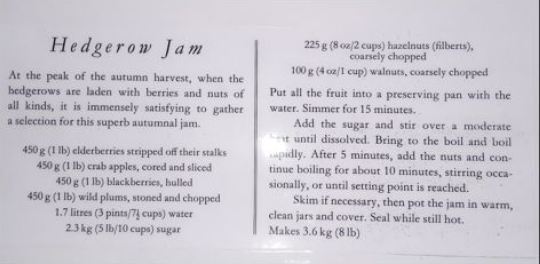
In late Spring the Elder tree is smothered in large clusters of small white or cream coloured flowers, which can be used to make elderflower Champagne. In late summer these are followed by clusters of small blue-black or red berries. While the berries can be used to make jams and jellies on no account should be eaten uncooked as they can be poisonous in this form. It is a very common plant throughout Britain and is typically found in hedgerows. Hedgerow jam is a good way to use a small amount of various pickings.
Plums - The Aylesbury Prune/Damson - Prunus domestica/ insitita
This is an old traditional English damson plum, once grown commercially round here and in the Vale of Aylesbury. Now there are only remnant orchards and hedgerows. Small to medium sized and oval in shape, the skin is a blue black colour. The fruit is sweet, slightly acidic and late ripening. It is perfect for cooking and was transported to the London markets by rail in the past, in specially made wicker baskets. It was also grown for its use in the manufacture of clothing dyes and is said to be used in dying the straw hats made in Luton.
There are many culinary uses including cakes, tarts, preserves and jam.

Rose hips - Rosa (Rosaceae family)
These are the fruits of the wild rose, sometimes known as the dog rose. The bright red-orange fruits are ripe in the late summer through autumn. Again, these are a common hedgerow plant - used in pies, jams, jellies, marmalade, syrups, teas and wines. Perhaps these are not one for the amateur as the hairs inside the fruit need to be removed (a source of itching powder!).
Wild rose hip fruits are rich in vitamin C and are also commercially grown to produce rose hip syrup. Rose hips are also commonly used in herbal tea, often blended with other flowers. They are said to be rich in nutrients and disease fighting properties.
These too are found in the Churchyard.
Sloes- Prunus spinosa
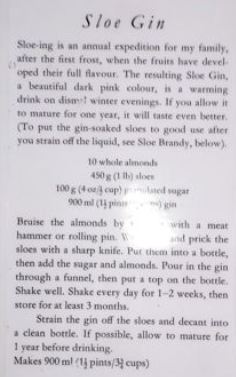
These are the fruits of the blackthorn, seen covered in white blossom in hedgerows in early spring. The fruit has a stone and is small and blue black in colour. It ripens in October/November and is traditionally not harvested until after the first frosts. Don';t be tempted to eat it from the tree as it is very bitter and astringent when fresh. Take care when picking as it has sharp thorns!
It is best used to make sloe gin - which couldn't be easier. The word commonly used for the fruit comes from the old English slah, of Germanic origin; related to Dutch slee and German Schlehe, from an Indo-European root probably shared by the Latin livere 'be blue' and Crotation sliva 'plum'. It grows freely in the Churchyard.