Inns, Beer Houses and Pubs of Edlesborough
Created by Friends of the Church on the Hill for a Heritage Open Days Display at St. Mary's Church 2015
As with most villages, the sale of alcohol played an important part in the life of the villages - partly because the water was often unsafe to drink.
Traditionally, INNS were buildings where travellers could seek lodging and, usually, food and drink. They were typically located in the country or along a highway eg the Bell and Greyhound Inns. They were both fully licensed inns and both had good accommodation. They were well used by the waggoners who trundled slowly to London with heavy farm produce: they were not popular on the main Watling Street – and the country inns were cheaper.
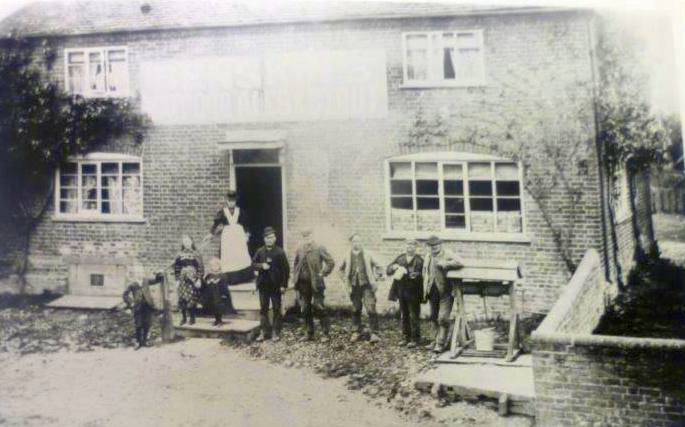
Bell Inn late 1890s
This photo was taken in the late 1980s when Mr Harry Gray held the licence of the pub. His wife, Hanna, is standing at the top of the steps and their son Jess, with their three daughters Beatrice, Florence and Linda at the bottom.
In August 1900 the licence was transferred to his brother-in-law, James Broyd, who held the licence until his death in 1936, his widow then held it until retiring in 1938. The licence was then transferred to her son in law, Mr Alfred Dyer, why remained landlord for nearly 20 years.
The five in the photograph, from left to right, are Mr George Cook, casual labourer who lived in Brook Street, Mr jack Neville, the local tailor, x, Mr jack Jaggard, a well digger and soot sower and Mr Ephrain Burrows who was a well known edge cutter and ditch digger.
G.C.
Source: CY Photo album
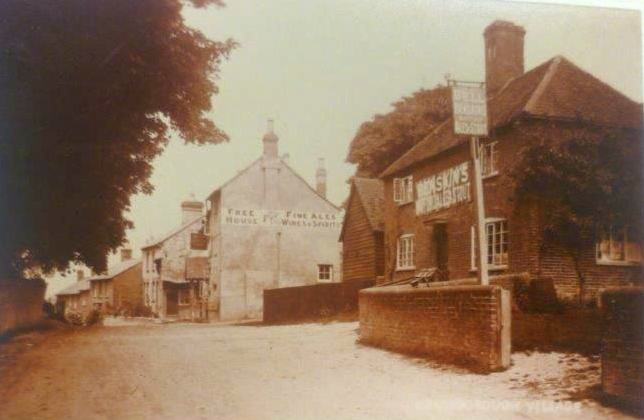
Bell Inn and The Greyhound, about 1921
James Broyd held the licence of the Bell until he died in 1936; his widow then held the licence until she retired in 1938. The licence was then transferred to her son-in-law, Alfred Dyer, who remained landlord for nearly 20 years.
The 1830 Beer Act introduced a new lower tier of premises permitted to sell alcohol, the BEER HOUSES.
Any householder who paid rates could apply, with a one-off payment of two guineas (approx £160 today), to sell beer or cider in his home (usually the front parlour) and even to brew his own on his premises. The permission did not extend to the sale of spirits and fortified wines, and any beer house discovered selling those items was closed down and the owner heavily fined. Beer houses were not permitted to open on Sundays.
Beer was viewed as harmless, nutritious and even healthy. Young children were often given what was described as small beer, which was brewed to have a low alcohol content, as the local water was often unsafe. The beer was usually served in jugs or dispensed directly from tapped wooden barrels on a table in the corner of the room.
The Wine and Beerhouse Act was introduced in1869 and required a licence from the local magistrate for the sale of beers, wines or spirits. Further provisions regulated gaming, drunkenness, prostitution and undesirable conduct, enforceable by prosecution or more effectively by the landlord under threat of forfeiting his licence. It prevented new beer houses from being created, but those already in existence were allowed to continue; most applied for the new licences and became PUBLIC HOUSES.
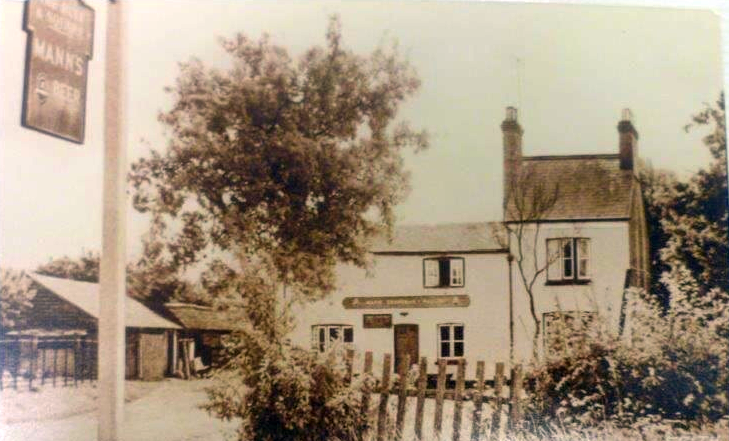
Rule and Square
The Rule and Square was demolished in the 1990s.
The license was held by Mr Henry Gray. He was twice married and it is said he was father of 15 children. Two of his daughters were born here, Ruth and Mary. Ruth became a servant in London after leaving school, where she met and married James Broyd. In August 1900 they came to Edlesborough and took over the licence of the Bell Inn from Harry Gray, James’ brother in law. Mary married Jack Jaggard and lived at The Good Intent for some years, later moving to two cottages near Sparrow Hall Farm.
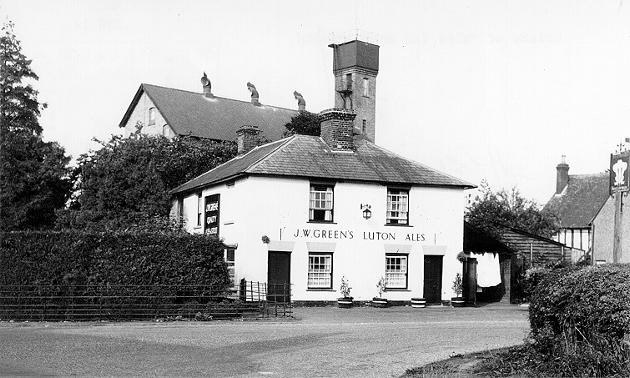
The Prince of Wales
This photo shows the Prince of Wales public house, situated in Brook Street, opposite the allotments, which was owned by the Brewery of J.W. Green. The licence to sell beer was surrendered about 1970 and so became a private residence. The tall building was known as the Two Counties Mill and was owned by Mr Alfred Thorne. The original was burned down in 1917. The first man to discover the fire was Mr Jack Gravestock, who lodged in Summerleys, at about 5am one morning. He raised the alarm and ran to the mill to release the horses from their stables. The mill was later built as it now stands. The house on the left was the home and offices of Mr Alfred Thorne and his family, but they later moved to Amersham to live.
The Good Intent Beer House, now the two cottages at the end of the Good Intent Estate, was originally called the Axe and Compass. A Manchester Company, called Good Intent Insurance, rented a room there where they collected dues from people to pay out when unemployed or sick. When a man was asked where he was going he would often say “Just off to the Good Intent”.
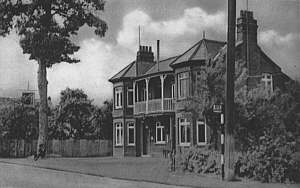
A new pub was built in 1888 next door to the original and it took the name the Axe and Compass. It provided a suitable location to view the cricket matches which became popular in the 1860s. The Rector of Little Gaddesden, C.G. Lane, played cricket for Surrey between 1856 and 1861 and then played for Edlesborough and Little Gaddesden in 1864/5. The local “gentry” sat on the balcony to watch many a cricket match played between the village team and a team led by farmers and gentlemen from Ashridge House.
The Good Intent Insurance Company still had a room in the old building and so it became the Good Intent Public House.